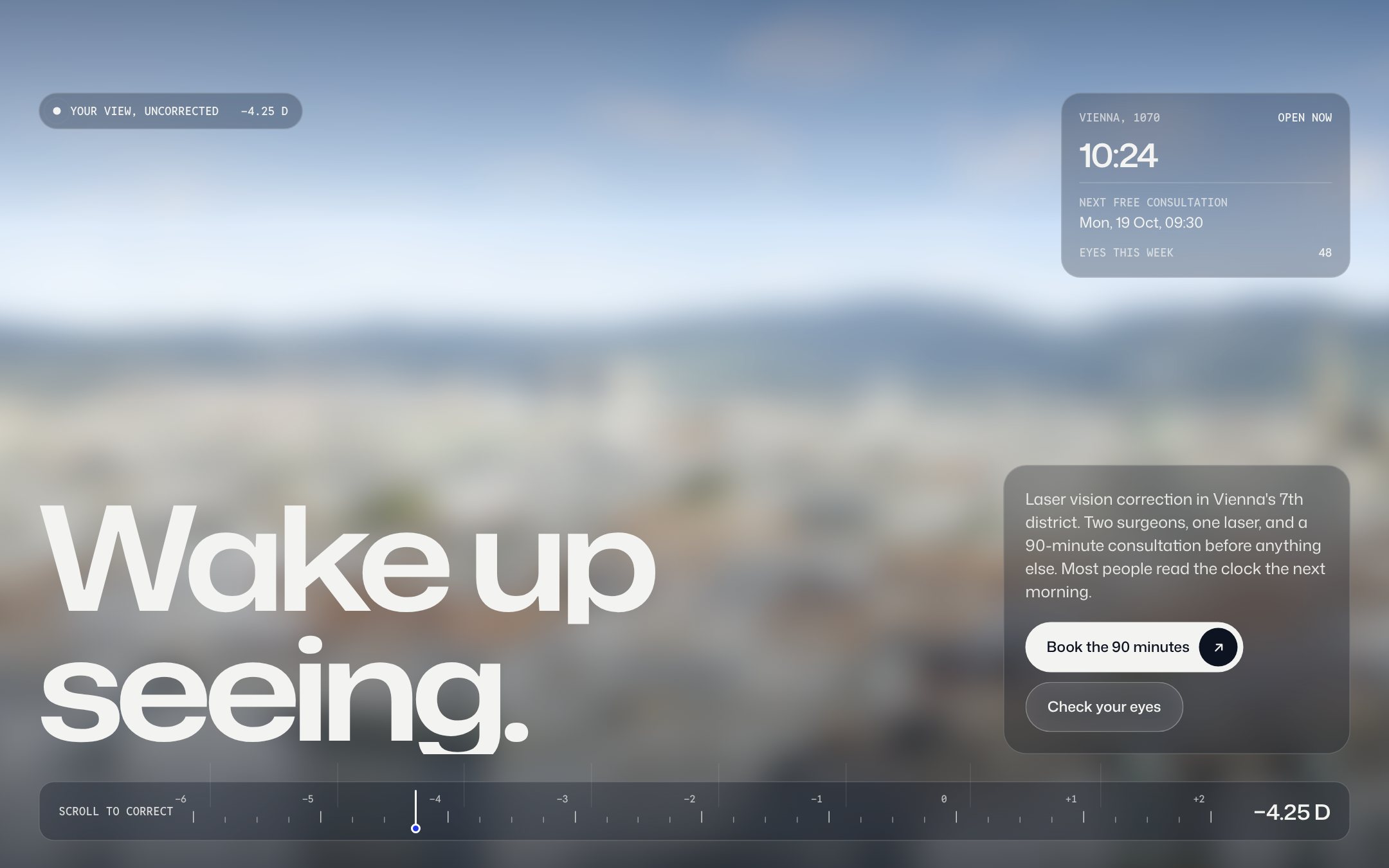
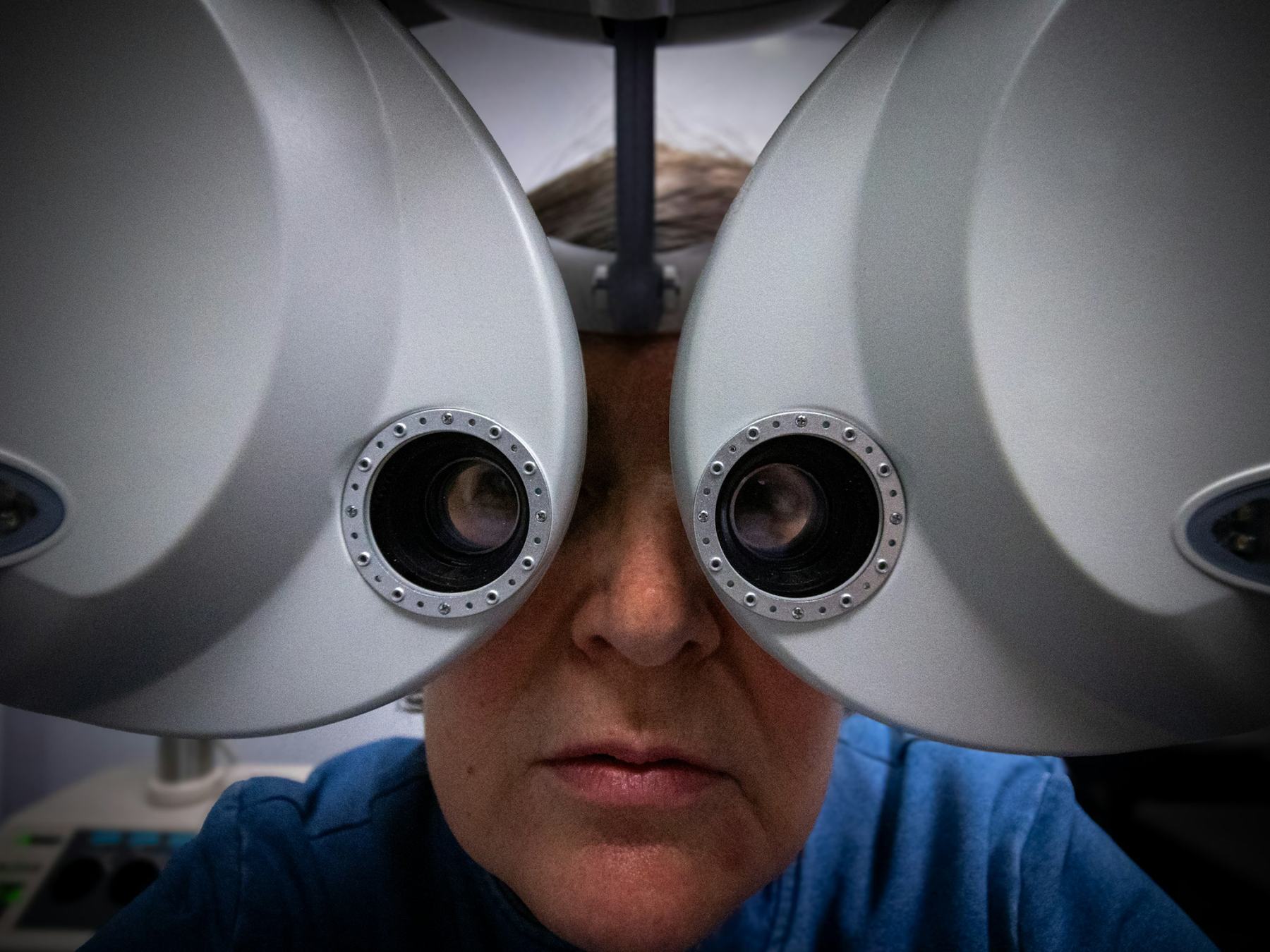
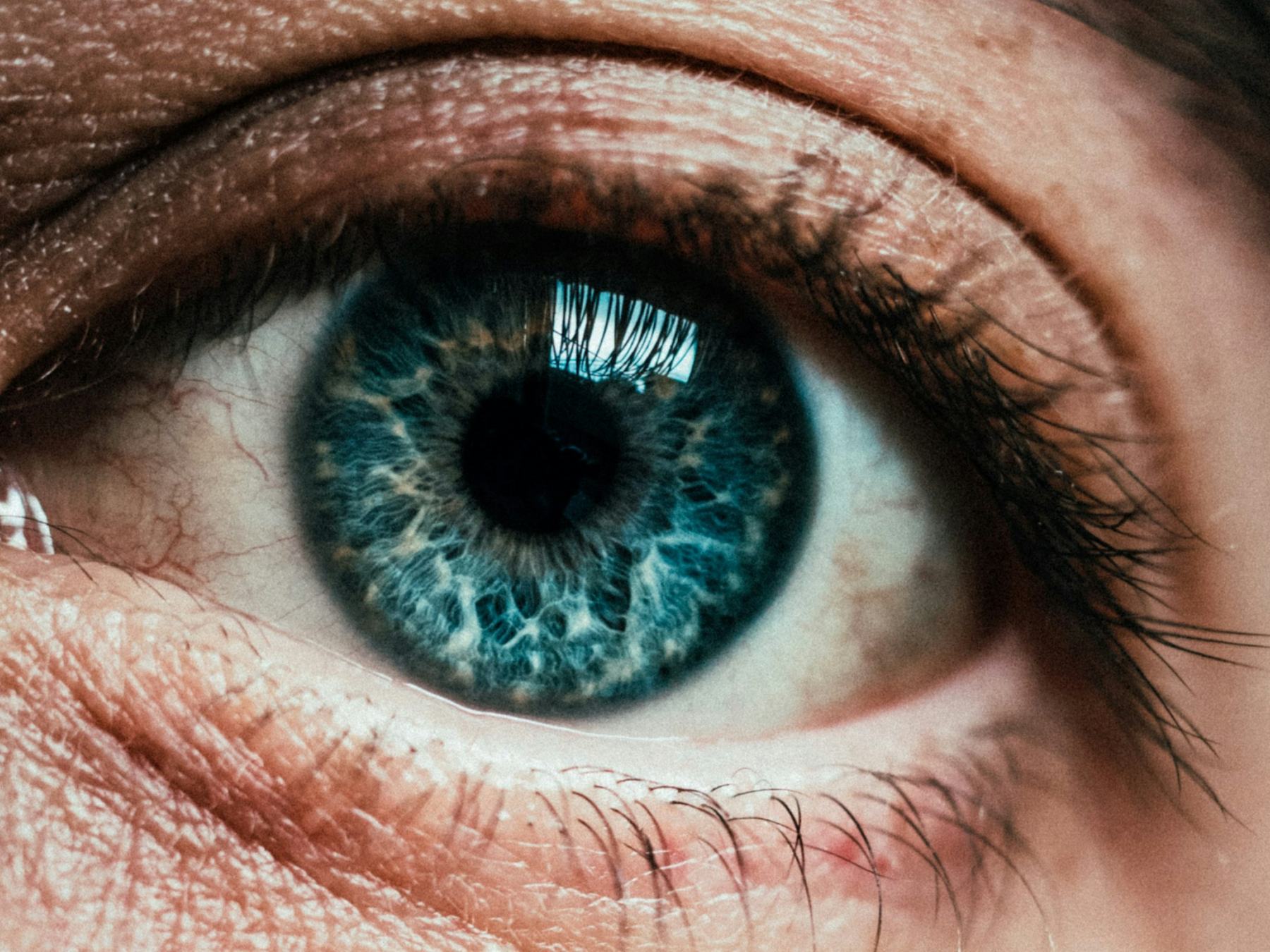
We map your cornea first.
A topographer reads 22,000 points on the front of your eye and a tomographer measures how thick it is, down to the micron. If your cornea is too thin for a laser, you hear it in the first twenty minutes.
Laser vision correction in Vienna's 7th district. Two surgeons, one laser, and a 90-minute consultation before anything else. Most people read the clock the next morning.
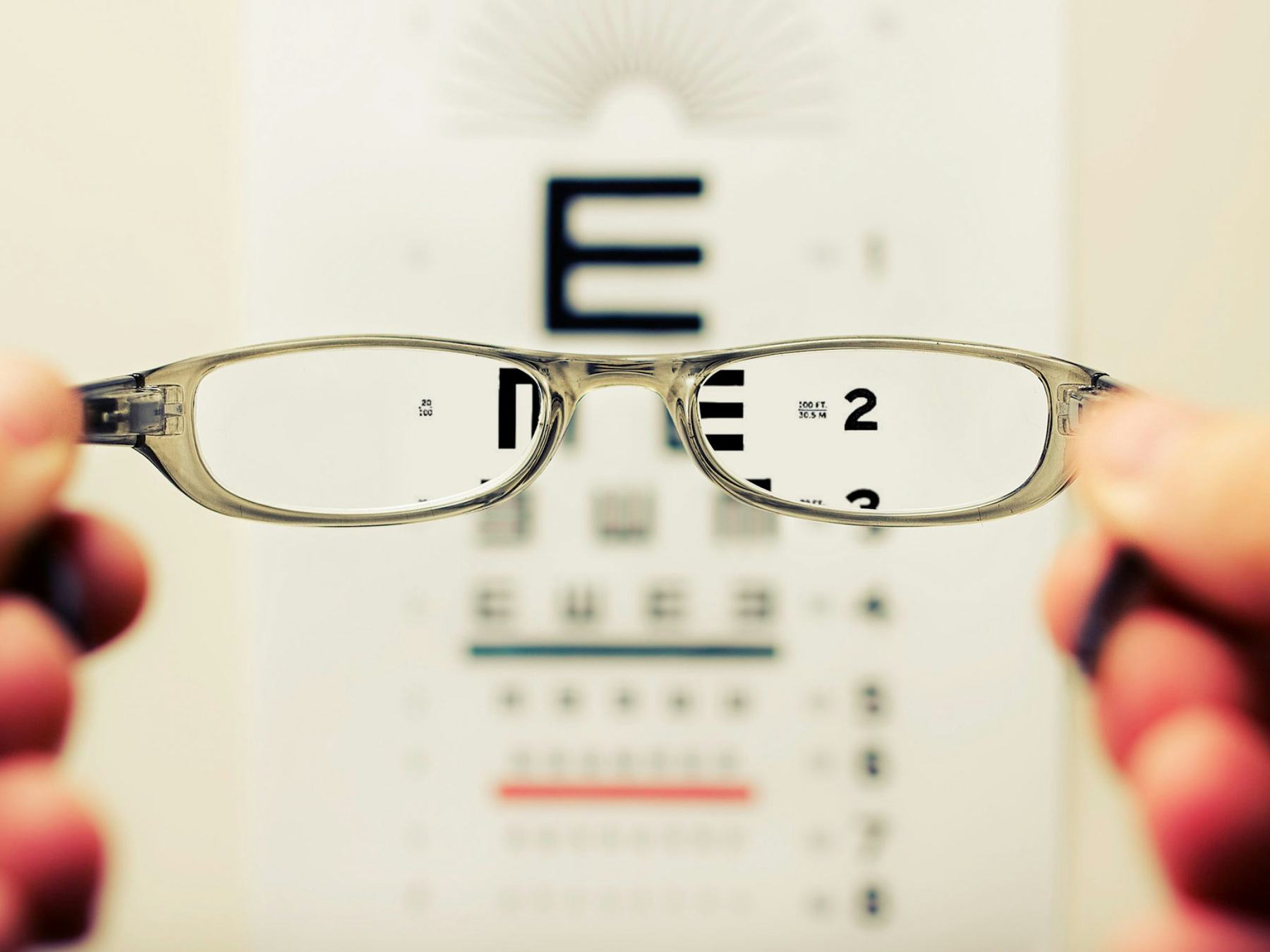
96 in 100 of our patients read the 1.0 line or better three months after treatment. Every one of them started here, at the big letter at the top.
A topographer reads 22,000 points on the front of your eye and a tomographer measures how thick it is, down to the micron. If your cornea is too thin for a laser, you hear it in the first twenty minutes.
Femtosecond pulses a thousandth of a millimetre apart outline a thin disc of tissue that holds your prescription. You look at a green light. It's quiet and it doesn't hurt.
The surgeon makes a single keyhole at the edge of the cornea. No flap is lifted, so most surface nerves stay intact and dry eye is less common than after LASIK.
Without the disc the cornea flattens by exactly your prescription. Light that used to focus in front of the retina now lands on the fovea, the 1.5 mm spot you read with.
For short-sight and astigmatism, with the gentlest recovery.
For long-sight too, and for prescriptions SMILE can't reach.
The laser works on the surface only. Slower to heal, nothing left behind.
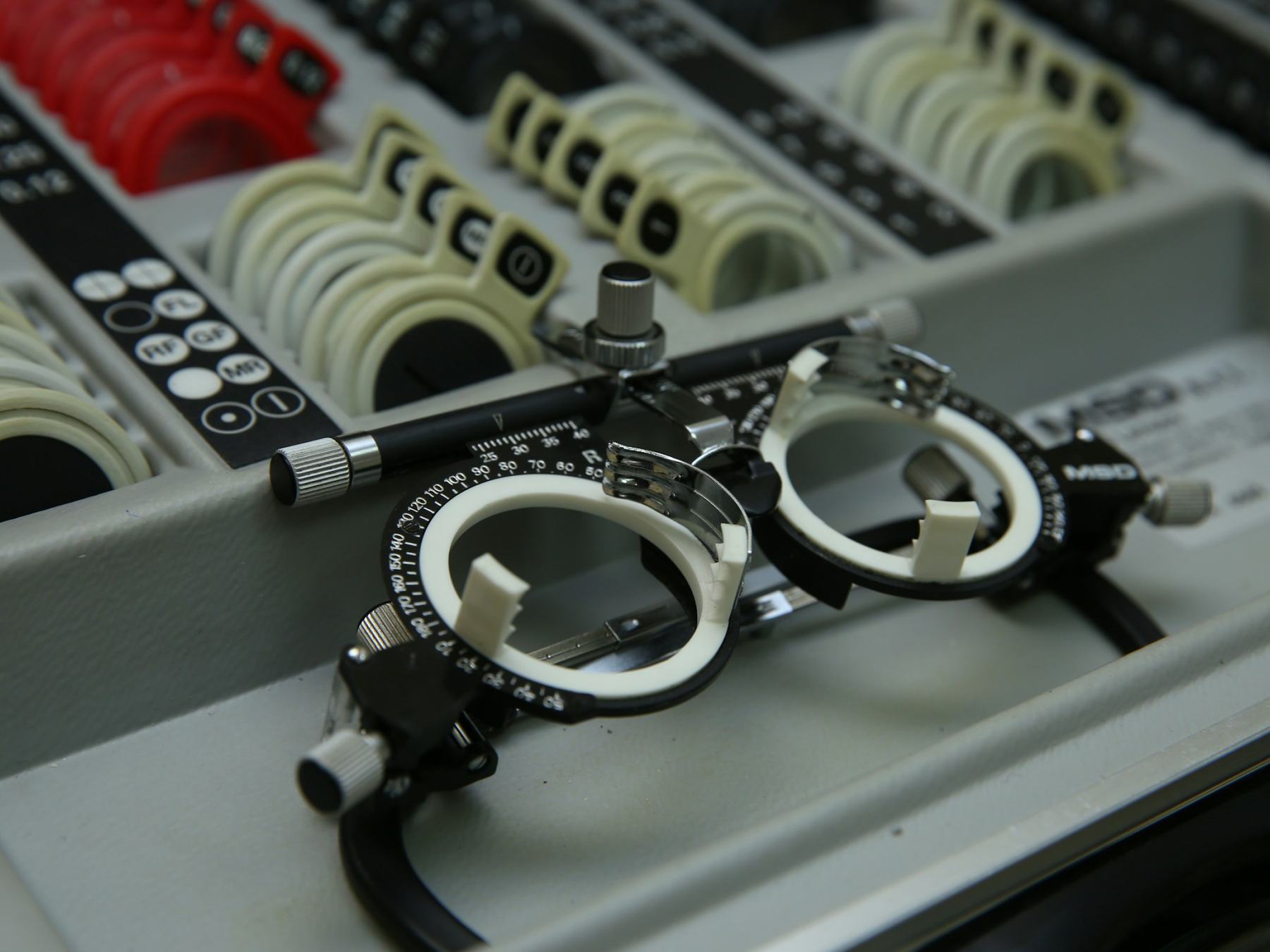
The numbers are on your glasses case or your last prescription. Drag the line across the photo to compare.
Back at your desk the next day. We'd confirm it with the cornea scan.
Today
After treatment
eyes treated at Kirchengasse since 2014
read the 1.0 line or better at three months
need a touch-up. It's included for two years
of check-ups in the price, at the same desk

There's no rotating staff and no sales consultant. The person who measures your eyes is the person at the laser, and the person you call if something feels off.
Refractive surgeon since 2009. Started Fovea in 2014 after nine years at a university eye clinic.
Joined in 2018. Looks after thin corneas, long-sight, and anyone over fifty asking about lens exchange.
That's all you do. The surgeon talks you through every second.
Measured again on the day, right before the laser starts.
Pulses a thousandth of a millimetre apart. Quiet, no pain.
Light now lands on the fovea, the spot you read with.
Fifteen years of the same move, every morning.
Rooftops, the spire, the clock on the church tower. All of it, without a frame around it.
It starts with 90 minutes and the surgeon who would treat you. If a laser isn't right for your eyes, you hear it that day.


If yours isn't here, ask it at the consultation. That's what the 90 minutes are for.

Bring your glasses and leave contact lenses out for a week. If a laser isn't right for your eyes, we'll tell you that day.